Your Cart is empty
Go to ShopAt some point, every rider has thought this:
“This helmet looks solid. Should be safe, right?”
And that’s where most mistakes begin.
On Indian roads, a helmet that looks safe and a helmet that is safe are often two very different things. Stickers, bold graphics, and heavy shells may feel reassuring, but real safety works quietly, deep inside the helmet, long before an accident ever happens.
Let’s break down what actually makes a helmet protect you, and what’s just noise.

A helmet’s job isn’t to impress your mirror reflection.
It’s to absorb impact, manage force, and protect your head when things go wrong.
Many riders unknowingly trust:
But none of these guarantee protection.
True safety comes from engineering, not appearance.
You’ve seen the ISI mark.
You might even look for it instinctively. But what does it actually stand for?
ISI certification means the helmet has:
In simple terms:
It has been tested to protect your head, not just cover it.
That’s why riders searching for ISI helmets online in India need to understand that the certification is not a sticker – it’s a process of testing, failure, improvement and approval.
Without it, you’re gambling.
The outer shell isn’t meant to stay perfect during an impact.
It’s meant to distribute force.
Good shells:
Materials like ABS or advanced composites are used not because they look tough, but because they behave predictably under stress.
If the shell cracks during impact, that’s not failure – that’s energy doing its job.
Inside every safe helmet is a quiet lifesaver: the EPS liner.
EPS (Expanded Polystyrene) is designed to:
This liner is calibrated carefully – too soft and it collapses too fast, too hard and it transfers force instead of absorbing it.
This balance is where real helmet engineering lives.
And it’s also why certified helmets feel “normal” until the moment they’re needed.
Safety doesn’t end at impact absorption.
Visors
A good visor:
Blurred or loose visors cause hesitation – and hesitation causes accidents.
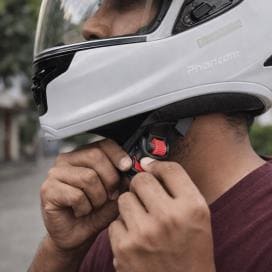
Chin Straps
Your helmet is useless if it doesn’t stay on your head.
Fit
A helmet should:
A poor fit reduces protection drastically – even if the helmet is certified.
Buying helmets online gives access to variety, but it also demands awareness.
Riders should:
Choosing ISI helmets online in India carefully means reading beyond product photos and trusting tested standards over marketing language.
The safest helmets are rarely the loudest.
They don’t shout.
They don’t exaggerate.
They simply do their job when it matters most.
True helmet safety is built through:
And that’s why smart riders choose with understanding, not impulse.
Choose helmets built with real testing, certified standards, and thoughtful engineering – because when safety matters, design must follow science.